What to Include in a Private Label RTD Coffee Enquiry
An RTD coffee brief is about a finished beverage and its presentation. Realvio’s catalogue includes coffee references in 320ml cans and 280ml bottles. Use the exact product reference when discussing a range or a possible private-label project.
What should a private-label RTD coffee enquiry include?
Include a coffee reference or flavor direction, your market, preferred format, expected quantity and artwork status. Realvio lists RTD coffee references in 320ml cans and 280ml bottles. Request the ingredient, allergen and nutrition information for the exact coffee selected, then discuss samples and the private-label scope.
Choose a beverage reference, not just a coffee name
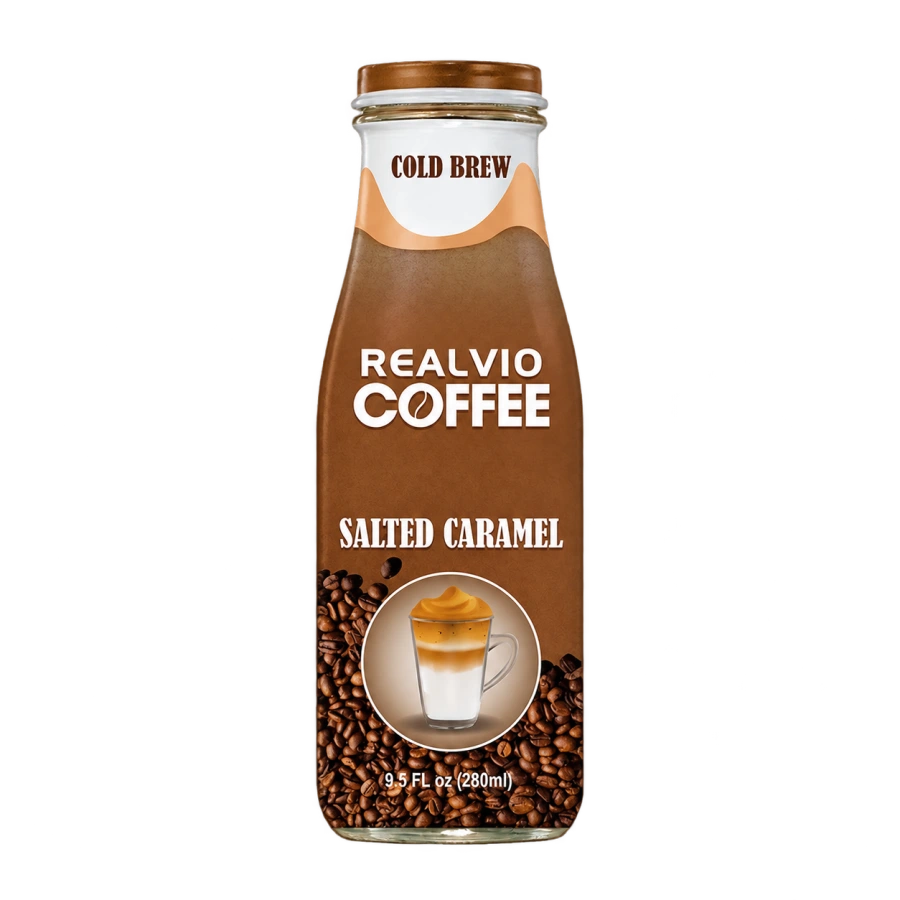
The catalogue includes Salted Caramel Coffee — Cold Brew in a 280ml bottle and Espresso Coffee — Cold Brew in a 320ml can. Record the full reference and format you want to evaluate. Similar names do not make the packaging or specification interchangeable.
Explain whether you are selecting existing products for your collection or asking about a private-label direction. State any changes you would like to explore. Availability and the scope of a particular project need to be confirmed rather than inferred from the catalogue.
Describe the profile and sample questions
Share the flavor references, sweetness preferences and drinking occasion you have in mind. Describe what you want your reviewers to assess so feedback can be tied to the selected sample. This helps distinguish a product preference from a request to change the beverage.
Ask for the current product information needed for that review. Ingredients, allergen information, nutrition details and product characteristics must come from the correct specification. A photograph, a coffee style name or a document for another volume is not a substitute.
Keep format and branding together
Indicate your preferred size, pack and brand direction. If you are considering a listed can and a listed bottle, include both references in the enquiry and explain what you want to compare. Do not assume that every coffee reference can move between those formats.
Include artwork status, target market and the label information your team needs to review. The private-label conversation should establish which product and presentation can be assessed together before you rely on a final pack layout or production schedule.
Ask for the next decision in the project
Provide an expected first-order quantity, a forecast if available and your target timing. Ask which samples, specifications and artwork decisions should be addressed first. These inputs support project planning without assuming a fixed minimum order or lead time.
Keep the enquiry focused on ready-to-drink products. If you are looking for roasted beans, brewing equipment or a different coffee service, describe that separately rather than treating the RTD catalogue as confirmation of those capabilities.
Your enquiry checklist
- Exact RTD coffee name, size and pack
- Existing product or private-label discussion
- Flavor and sweetness references for evaluation
- Current specification and allergen/nutrition questions
- Brand, artwork and target market
- Expected quantity, forecast and next sample decision