Private Label or Custom Beverage Development: Which Route Fits Your Brand?
Choosing a starting point helps you ask better questions. You may want to build a brand around a product direction already in the range, or explore changes to the beverage itself. Describe what you need to change before choosing a project label.
Should I start with private label or a custom beverage brief?
Start with a private-label discussion when your focus is an existing beverage reference and your brand presentation. Use a beverage development brief when you want to explore changes to flavor, sweetness or texture. Describe the requested changes first; Realvio will discuss the scope and sample review needed for your project.
| Brief element | Private-label discussion | Beverage development discussion |
|---|---|---|
| Starting point | An existing beverage reference and your brand presentation | A product direction or changes you want to explore |
| Information to share | Selected product, label/artwork status and destination market | Flavor references, sweetness, texture and essential requirements |
| Next discussion | Review the selected product, packaging and label scope | Discuss feasibility, sample evaluation and product specifications |
| Confirm for either route | Quantities, pricing, responsibilities and timing | Quantities, pricing, responsibilities and timing |
These are starting points for a discussion, not fixed service packages or confirmation that a requested formulation is available.
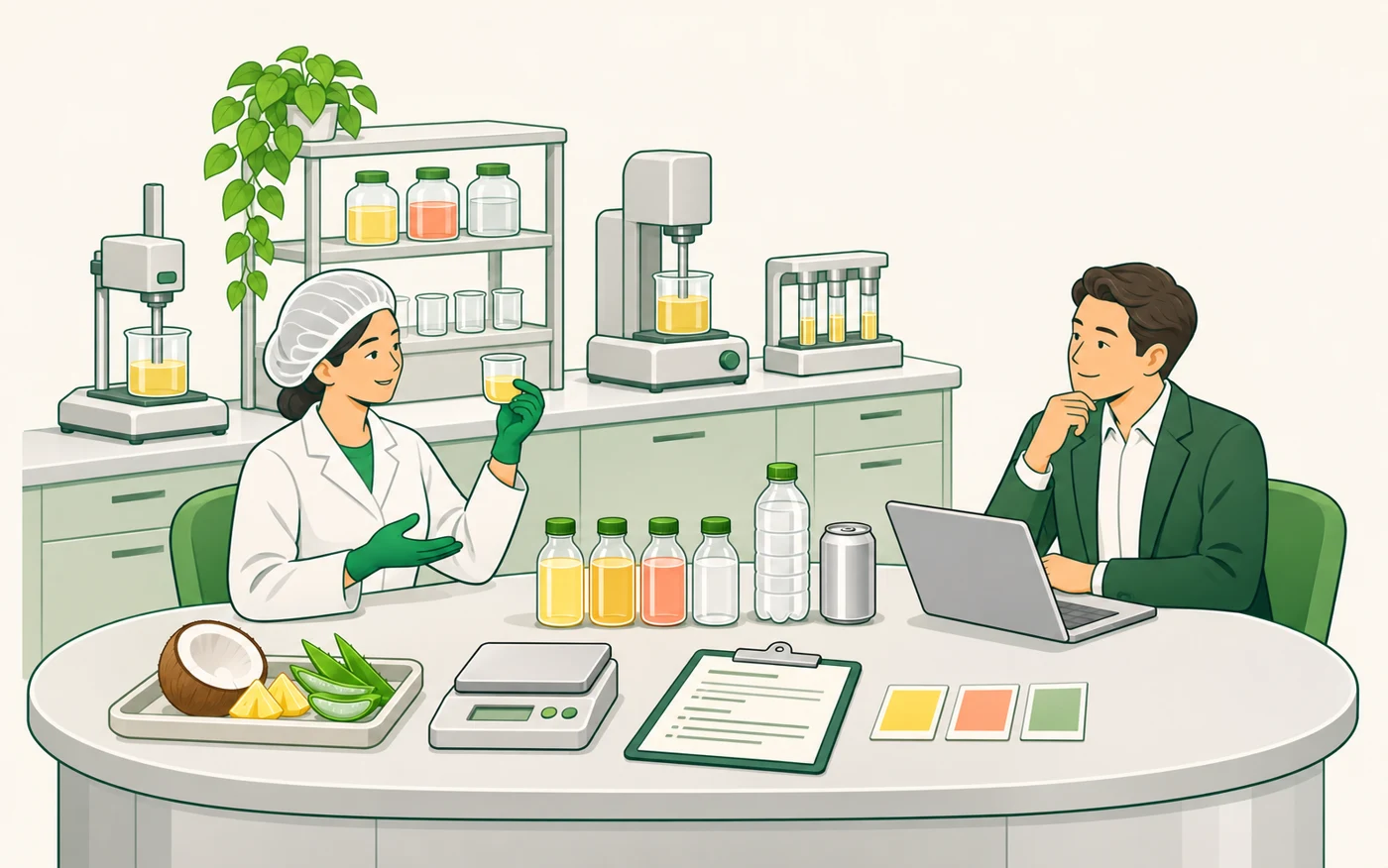
Separate brand presentation from the beverage brief
For an initial private-label conversation, identify the product category, preferred format and the brand presentation you are planning. If an existing Realvio product is a useful reference, include its exact name and size so the team can understand your starting point.
A development discussion adds questions about the drink itself: flavor direction, sweetness, texture or other formulation preferences. These two conversations can overlap. The right route depends on what needs to be evaluated and confirmed for your particular project.
Write a change list before requesting a quotation
Make three lists: characteristics you want to keep, changes you would like to explore and decisions you have not made. This is more useful than a general request for a custom drink because it makes the scope of the conversation visible.
For example, you might have a preferred category and serving size but still be deciding on flavor and artwork. Share that uncertainty. Do not assume that a catalogue product can be supplied in any format, or that a proposed change has already been accepted.
Use samples and specifications to align the project
Ask how sample evaluation will be organized and which product details need to be reviewed before moving forward. Keep the sample reference, feedback and artwork version together so the discussion does not mix different stages of the project.
Confirm the selected beverage, ingredient declaration, nutrition information and packaging requirements through the relevant documents. A conversation about a flavor preference is not a promise of formula ownership, intellectual-property transfer or an unrestricted formulation service.
Keep commercial assumptions open until confirmed
Include expected quantities, market, label configuration and target timing in the brief. These inputs help the team discuss the project as a whole. Minimum quantities and schedules should be confirmed for the agreed product and packaging rather than copied from another enquiry.
A focused next step is to ask what can be evaluated first: the product selection, a sample direction or packaging options. Realvio brings these discussions together around your brief; the project-specific scope is agreed before it becomes a production plan.
Your enquiry checklist
- Product category and existing reference, if any
- Brand/artwork changes versus beverage changes
- Required features versus preferences
- Sample feedback and specification review needs
- Expected quantities and destination market
- Questions about scope, ownership or responsibilities to clarify